Family: Geraniaceae
Mongolian name:
English name: Siberian cranesbill
Collection Number: 22
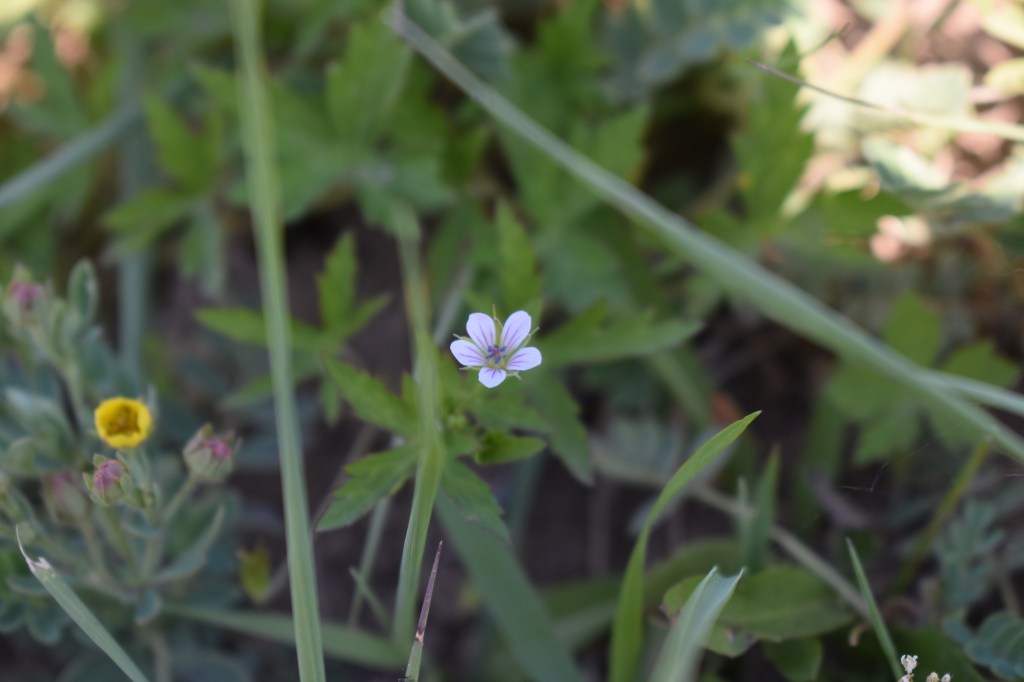

Geranium sibiricum is a perennial plant native to temperate Eurasia. In India, it is used to treat wounds and as an astringent and diuretic. Pharmacological studies indicate that extracts of G. sibiricum have antioxidant and anti-inflammatory properties, as well as promoting hair growth. As with other Geranium species, G. sibiricum also contains bioactive compounds with potential antimicrobial, anti-inflammatory, and antioxidant properties, supporting its traditional medicinal applications.
Citations
Agnihotri, P., H. Singh, D. Husain, and V. Dixit. 2014. Notes on the Ethnobotanically Important Genus Geranium Linnaeus (Geraniaceae) in India. Pleione.
Alshehri, Bader. 2024. The Geranium Genus: A Comprehensive Study on Ethnomedicinal Uses, Phytochemical Compounds, and Pharmacological Importance. Saudi Journal of Biological Sciences 31(4):103940. https://doi.org/10.1016/j.sjbs.2024.103940.
Boisvert, William A., Miri Yu, and Youngbin Choi. 2017. Hair Growth-Promoting Effect of Geranium Sibiricum Extract in Human Dermal Papilla Cells and C57BL/6 Mice. BMC Complementary and Alternative Medicine 17(1). https://doi.org/10.1186/s12906-017-1624-4.
“Geranium sibiricum.” 2024. Plants of the World Online. Royal Botanic Gardens Kew. Accessed April 2025. https://powo.science.kew.org/taxon/urn:lsid:ipni.org:names:373741-1.
Luger, P., M. Weber, S. Kashino, Y. Amakura, T. Yoshida, T. Okuda, G. Beurskens, and Z. Dauter. 1998. Structure of the Tannin Geraniin Based on Conventional X-Ray Data at 295 K and on Synchrotron Data at 293 and 120 K. Acta Crystallographica Section B: Structural Science 54(5):687–694. https://doi.org/10.1107/S0108768198000081.
Wu, Nan, Yuangang Zu, Yujie Fu, Yu Kong, Jintong Zhao, Xiaojuan Li, Ji Li, Michael Wink, and Thomas Efferth. 2010. Antioxidant Activities and Xanthine Oxidase Inhibitory Effects of Extracts and Main Polyphenolic Compounds Obtained from Geranium Sibiricum L. Journal of Agricultural and Food Chemistry 58(8):4737–4743. https://doi.org/10.1021/jf904593n.
 Reference Collection